
Drones Reshape Modern Warfare and Daily Life as Delivery Ambitions Soar
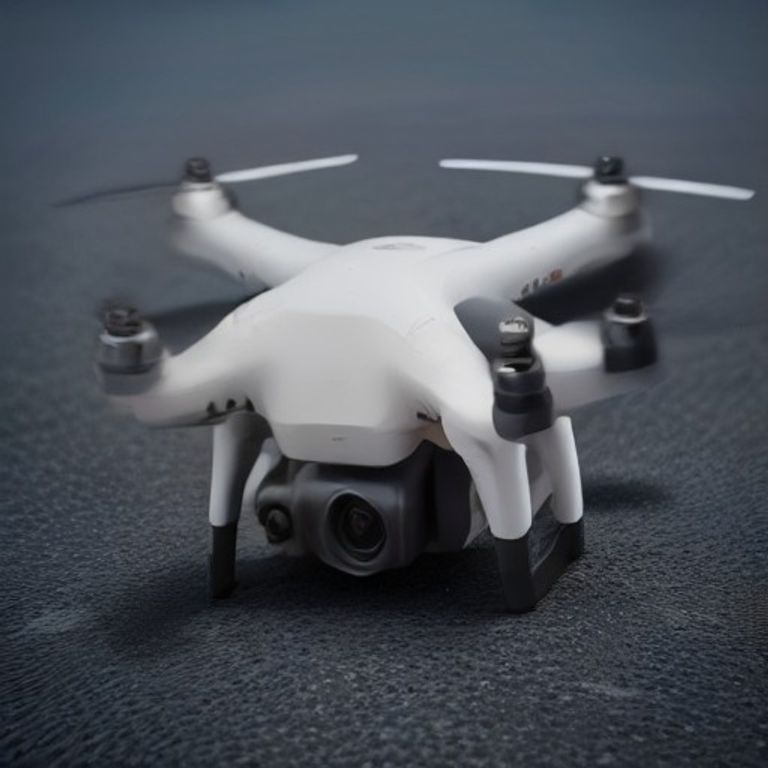
The humble unmanned aerial vehicle has completed its transformation from hobbyist curiosity to a defining technology of the 2020s, simultaneously reshaping battlefields in Ukraine and Yemen while preparing to rewrite the logistics of urban commerce. In the past week alone, the dual-track evolution of drone technology has accelerated dramatically: Russia issued formal threats against the United Kingdom after British-made drones were deployed by Ukrainian forces in strikes on Russian territory, marking a significant escalation in the conflict's technological dimension. Meanwhile, halfway across the world, Uber announced a partnership with Zipline targeting as many as one million drone deliveries per day by 2029 — a figure that would make aerial delivery as routine as curbside pickup.
From Battlefield to Doorstep: The Converging Trajectories
The convergence is no coincidence. The same advances in GPS-assisted stabilization, obstacle avoidance, and autonomous navigation that allow a quadcopter to hover precisely over a Kyiv suburb also enable it to thread between skyscrapers in Dallas or London with a burrito or a blood sample. Military procurement has historically subsidized the R&D that later trickles down to consumer and commercial markets; today, that cycle has tightened to months rather than years. Ukrainian units now modify off-the-shelf FPV (first-person view) drones with 3D-printed payloads, while Zipline's fixed-wing aircraft — originally developed for medical supply runs in Rwanda — leverage redundant flight computers and parachute recovery systems derived from defense requirements.
Yemen offers a parallel case study in asymmetric aerial warfare. Houthi forces and their rivals have both expanded domestic drone production, fielding loitering munitions and reconnaissance platforms that blur the line between state and non-state capabilities. Analysts note that the proliferation of relatively inexpensive, long-range UAVs has effectively erased the traditional advantage of air superiority held by conventional militaries, forcing a rethink of air defense doctrines worldwide.
On the commercial front, the regulatory environment is finally catching up to technical possibility. The U.S. Federal Aviation Administration has granted beyond-visual-line-of-sight (BVLOS) waivers to multiple operators, and Europe's U-space framework is creating dedicated corridors for low-altitude unmanned traffic. These regulatory green lights are the prerequisite for Uber's million-delivery ambition: without them, each flight requires a human observer, defeating the economics of automation.
Consumer drones, meanwhile, have settled into a mature product category dominated by DJI, whose latest models pack 4K cameras, 40-minute flight times, and omnidirectional obstacle sensing into airframes under 250 grams — a weight class that sidesteps many registration requirements. Reviewers at PCMag, WIRED, and Popular Mechanics consistently rank DJI's Mini and Air series as the best all-around choices for 2026, citing the company's vertically integrated supply chain and software ecosystem as a moat competitors have struggled to cross.
Yet the industry faces headwinds. Supply-chain scrutiny over Chinese-made components has pushed Western governments to fund domestic alternatives, while privacy advocates warn that ubiquitous aerial cameras — whether mounted on police drones, delivery fleets, or neighbor's quadcopters — create a surveillance infrastructure no legislation has adequately addressed. The same week Uber announced its Zipline deal, a coalition of civil-liberties groups filed suit challenging the FAA's latest BVLOS rulemaking on Fourth Amendment grounds.
What emerges is a technology at an inflection point: drones are no longer a niche tool but a layer of infrastructure, as invisible and essential as cellular networks. The next five years will determine whether that layer serves primarily the logistics of war, the convenience of commerce, or — most likely — an uneasy amalgam of both.