
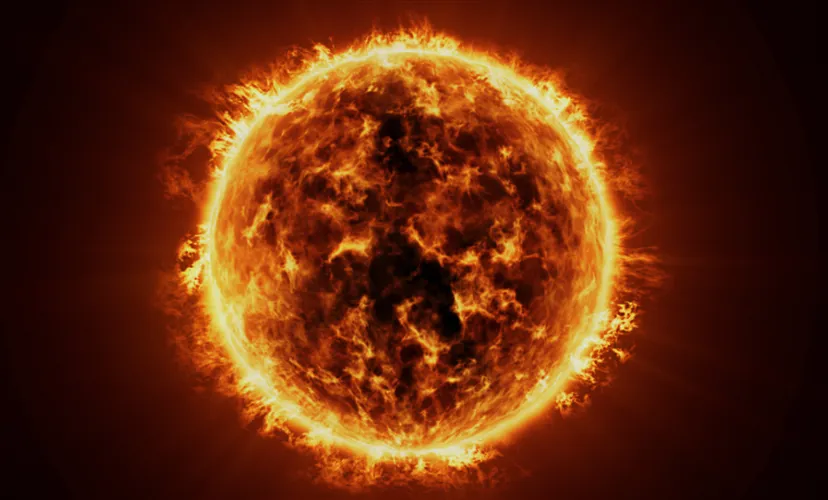
The Sun is the powerhouse of our solar system, a massive ball of hot plasma that provides light and heat essential for life on Earth. Its gravity keeps planets in orbit, and its energy drives weather, oceans, and ecosystems.
Solar Activity and Earth
The Sun is not always stable. Solar phenomena like flares and coronal mass ejections (CMEs) release large amounts of energy and charged particles. Effects on Earth can include:
- Auroras: Beautiful northern and southern lights caused by charged particles interacting with our atmosphere.
- Disruptions to satellites and communications: High solar activity can damage electronics, GPS, and radio signals.
- Power grid issues: Strong solar storms can induce currents in electrical systems, sometimes causing blackouts.
What If Something Went Wrong with the Sun?
While the Sun is stable for now, changes could have dramatic consequences:
- Reduced solar output: Less energy could lead to an ice age and collapse of ecosystems.
- Increased activity or solar explosions: Extreme solar flares could severely damage technology and endanger astronauts in space.
- End of life: In about 5 billion years, the Sun will expand into a red giant, potentially engulfing Earth. Without the Sun, life would not survive.
Why Understanding the Sun Matters
Studying solar activity helps us:
- Predict space weather and protect technology.
- Understand climate variations influenced by solar cycles.
- Appreciate the delicate balance that sustains life on Earth.
Conclusion:
The Sun is the heart of our solar system, and life on Earth depends on its stability. While it seems constant, understanding its activity and potential risks allows us to protect our technology and better appreciate the star that makes life possible.
Leave a Reply